

Monica Walker
|
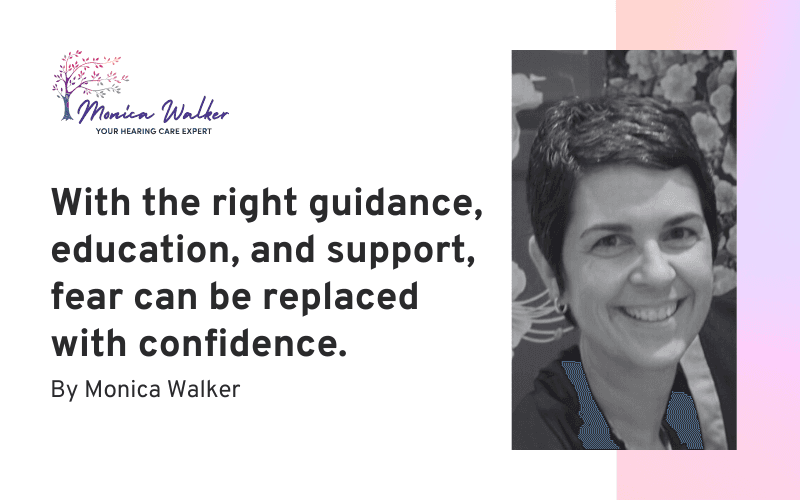
Few health concerns create as much uncertainty as the realization that your hearing may be changing. For many people, that fear becomes even greater when hearing loss runs in the family.
Questions quickly arise: What happens next? Will life look different? Will I still be able to do the things I enjoy?
When Deborah first came to see me, those questions weighed heavily on her mind. She recalls that "terror came with realizing I might have hearing loss, especially since it runs in my family, and I had no idea what was ahead for me or if I'd be able to live the life I wanted."
If you've experienced similar worries, you're not alone. Many patients arrive feeling overwhelmed by uncertainty. They aren't just concerned about hearing differently; they're concerned about how hearing loss might affect their relationships, careers, hobbies, and independence.
What Deborah discovered, and what I hope every patient discovers, is that hearing loss does not have to define your future. With the right guidance, education, and support, fear can be replaced with confidence.
Beyond the Medical: Finding Complete Peace of Mind from Day One
One of the most important parts of hearing care begins long before hearing aids are discussed. It starts with helping patients feel understood, supported, and reassured.
Deborah remembers that feeling clearly. Reflecting on her first visit, she shares, "From my first impression, I felt that everything would be okay and that I would be completely taken care of."
Those words mean a great deal to me because hearing healthcare is about more than test results. When patients are facing a new diagnosis or concern, they deserve answers, encouragement, and a clear path forward.
Many people assume hearing care is a one-time appointment. In reality, it is a long-term partnership. As hearing needs change over time, having a trusted professional available to answer questions and provide guidance can make all the difference.
My goal has always been to ensure that you never feel like you’re navigating hearing loss alone. When you know someone is there to support you at every stage, uncertainty becomes much easier to manage.
The Tech Advantage: Staying Ahead with Modern Hearing Innovations
Hearing technology has evolved dramatically over the years. Modern hearing aids offer advanced features that improve clarity, reduce background noise, connect with smartphones, and adapt automatically to changing listening environments.
Keeping up with these advancements can feel overwhelming. That's why expert guidance remains so valuable.
Deborah highlights this ongoing support when she says, "Monica Walker has been with me for many years, always addressing my needs, reassuring me, and keeping me updated on the newest advances."
Technology works best when it is matched to the individual using it. Every patient has unique listening demands, whether they spend their time in busy workplaces, social gatherings, quiet home environments, or a combination of all three.
While over-the-counter solutions may seem convenient, they cannot provide the personalized assessment, programming, adjustments, and long-term care that many patients need. Having a dedicated hearing specialist means your technology continues to evolve alongside your lifestyle and hearing needs.
The True Impact: Reclaiming a Normal, Vibrant Life
The benefits of treating hearing loss extend far beyond hearing sounds more clearly. Improved hearing can positively influence communication, confidence, relationships, work performance, and overall quality of life.
Deborah experienced these changes firsthand. She explains, "Hearing aids have impacted my life in every way possible to live and function normally."
"Live and function normally" captures something many patients seek: they want to participate in conversations without constantly struggling to keep up. They want to enjoy time with family and friends without feeling left out. They want to feel confident navigating daily life.
When hearing care creates those results, patients often become enthusiastic advocates for treatment. Deborah adds, "I have referred many to Monica because I feel she is the best there is."
Recommendations like these are powerful because they come from genuine experiences. When someone regains confidence and connection through better hearing, they naturally want others to experience the same relief.
More than a Clinic: Where Healthcare Feels like Catching Up with a Friend
One of the things I value most about my work is the relationships I’ve built with patients over the years. Hearing care appointments often become opportunities to catch up, celebrate milestones, and share stories about life beyond hearing health.
Deborah captures this perfectly when she says, "My favorite thing about working with the clinic is our conversations on so many subjects like food, restaurants, books, and shows."
Moments like these remind me that patients are more than hearing tests or hearing aids. Every person who walks through the door has unique experiences, interests, challenges, and goals.
When you feel comfortable sharing those parts of your lives, it helps create a stronger partnership and a more personalized hearing care experience. The best healthcare comes from truly listening not only to hearing concerns but also to the people behind them.
Don't Let Fear Hold You Back
Deborah's story demonstrates that while the realization of hearing loss can be frightening, the journey does not have to stay that way. With the right support, expert guidance, and modern technology, fear can give way to confidence, connection, and peace of mind.
If you've been putting off a hearing evaluation because you're uncertain about what comes next, consider taking that first step. You deserve answers, reassurance, and a care plan designed around your unique needs.
Schedule an appointment with Monica Walker today and experience compassionate, expert hearing care that helps you move forward with confidence.
Frequently Asked Questions
Q: What if hearing loss runs in my family? Does that mean I will inevitably lose my hearing?
A: A family history can increase your risk of developing hearing loss, but it does not guarantee that you will experience the same degree or type of hearing changes as a relative. Regular hearing evaluations can help identify changes early and provide opportunities for intervention before communication difficulties become more significant.
Q: How do I know if I need hearing aids or if my hearing changes are still minor?
A: The only way to know for certain is through a comprehensive hearing evaluation. Many people wait longer than they should because they assume their symptoms are not serious enough. Even mild hearing loss can affect communication, concentration, and quality of life. Early assessment helps determine the most appropriate next steps.
Q: Are modern hearing aids really different from older devices?
A: Yes. Today's hearing aids are significantly more advanced than previous generations. Many feature automatic sound adjustments, Bluetooth connectivity, rechargeable batteries, and sophisticated noise-management systems. Working with a hearing specialist ensures that these features are properly matched and adjusted to your specific hearing needs.
Source
A trusted medical resource offering evidence-based information on hearing loss, hearing aids, diagnosis, treatment options, and long-term hearing health management.